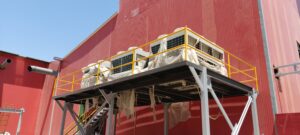
In the industrial world, machinery and heavy equipment operate continuously, and this operation is usually accompanied by significant heat generation. Excessive heat can reduce efficiency, cause premature failures, and even lead to complete shutdown of production lines. For this reason, cooling industrial machinery has become a critical necessity. One of the most reliable and efficient solutions for this purpose is the use of industrial chillers, which prevent equipment from overheating through precise temperature control and keep machines operating under stable conditions. This article examines the key role of chillers in cooling industrial machinery, their types, applications, and important selection considerations.
What Is a Chiller and How Does It Work?
A chiller is a device used in HVAC systems to provide the required cooling for air conditioning. The operating principle of a chiller is based on heat exchange. In this process, a refrigerant in liquid or gas form absorbs heat from the air and then transfers it to the cooling section, where the heat is rejected and the desired temperature is achieved.
The Role of Chillers in Cooling Industrial Machinery
By absorbing the heat generated by industrial machinery, a chiller keeps equipment temperature within an appropriate range and prevents damage or performance degradation.
How Heat Is Transferred from Machinery to the Chiller
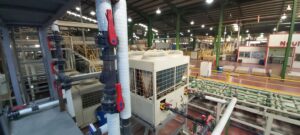
In industrial systems, the heat generated by machinery is absorbed by a cooling fluid (usually water or a water–glycol mixture). This fluid circulates in a closed loop between the machine and the chiller, absorbing heat from the equipment surfaces and transferring it to the chiller evaporator. In the evaporator, the heat is transferred to the refrigerant, and the cooled fluid is returned to the machine. This cycle maintains stable machinery temperatures under high operating loads.
Examples of Machinery That Require Cooling
Plastic injection molding machines, CNC machines, laser equipment, industrial printing machines, and medical equipment such as MRI systems are among the devices that generate significant heat during operation.
Without proper cooling, excessive temperatures can lead to reduced accuracy, component failure, or even complete production shutdown. Therefore, the use of industrial chillers in these fields is essential and critical.
Advantages of Using Chillers for Equipment Cooling
Using chillers for cooling industrial equipment increases service life, improves performance, and reduces the risk of failures caused by excessive heat. By maintaining a uniform and controlled temperature, chillers prevent temperature fluctuations that could negatively affect machinery precision.
In addition, chillers help reduce water consumption compared to open cooling systems because they operate in closed loops. This, along with reduced maintenance requirements and minimized production downtime, leads to optimized operating costs and increased production efficiency.
Selecting the Right Chiller for Industrial Machinery
For optimal and reliable performance of industrial machinery, the chiller should be selected based on thermal capacity, the type of cooling fluid, and environmental conditions to ensure precise and stable cooling.
Required Cooling Capacity (Tons of Refrigeration / Kilowatts)
The first step in selecting a chiller is calculating the amount of heat generated by the machinery that must be dissipated by the chiller. This value is usually expressed in kilowatts or tons of refrigeration. Choosing a chiller with insufficient capacity can lead to increased system temperature and operational disruptions, while an oversized chiller increases energy consumption and costs. Therefore, accurate thermal load calculation plays a key role in optimal selection.
Type of Cooling Fluid (Water, Oil, Water–Glycol, etc.)
Depending on the type of machinery and its sensitivity, the cooling fluid may vary. In many applications, water or water–glycol mixtures are used, but in systems requiring very low temperatures or special characteristics, thermal oils are employed. Selecting the appropriate fluid has a direct impact on system performance, safety, and service life.
Installation Space, Ventilation, and Climatic Conditions
Available installation space, site ventilation, and regional climatic conditions are other important factors in chiller selection. In hot and humid regions or industrial environments with limited ventilation, chillers with stronger ventilation systems or designs specifically suited for harsh conditions should be used. The chiller must also be selected to fit the available space and allow adequate access for maintenance and servicing.
Example of an Industrial Equipment Cooling Project Using a Chiller