


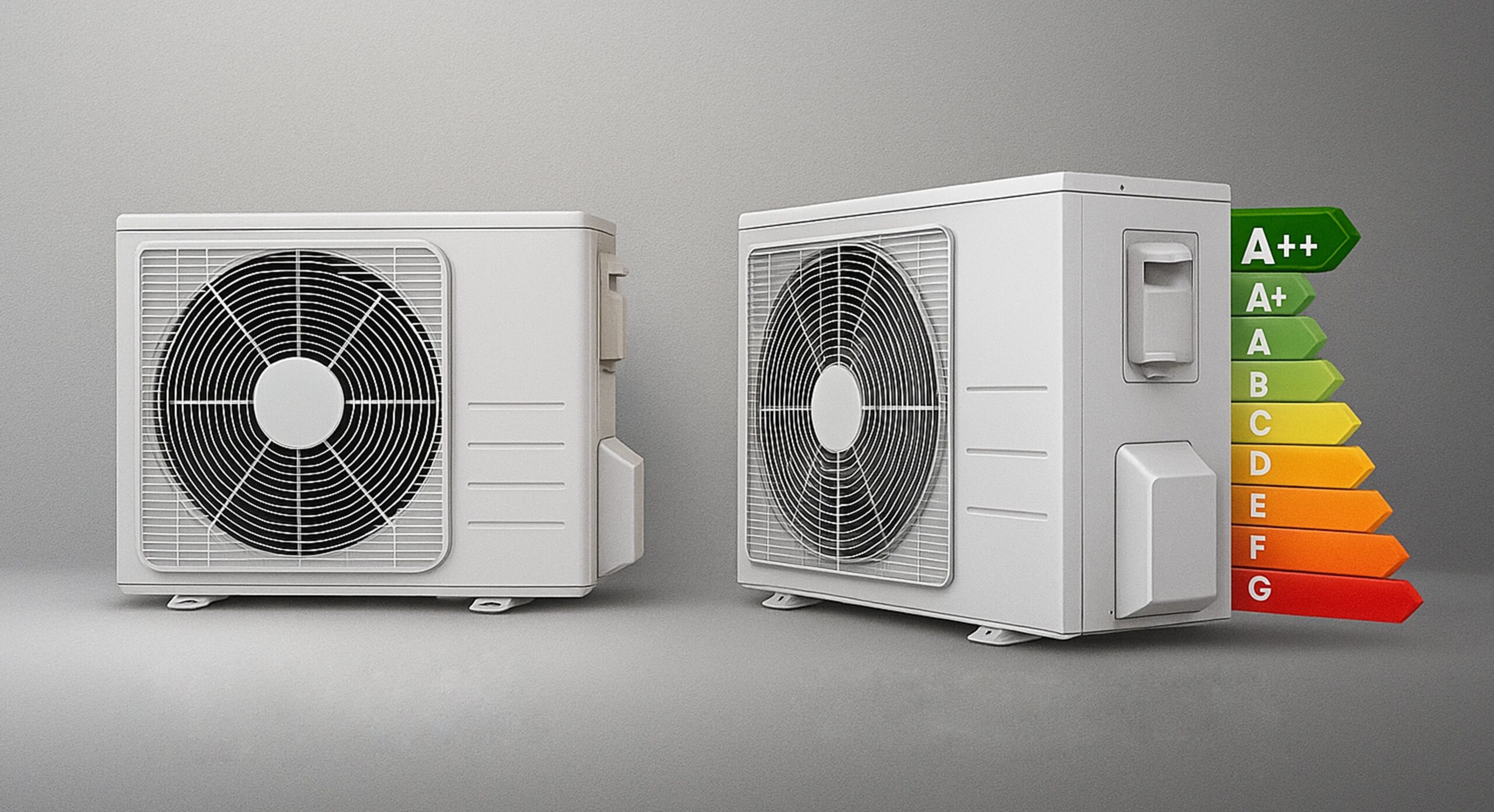
Choosing the right air conditioning system for your home or workplace is an important decision that directly affects both your comfort and your energy costs. Among the available options, split air conditioners are very popular due to their efficiency and reliable performance. However, today’s market mainly offers two types of split systems: inverter split air conditioners and conventional (non‑inverter) split air conditioners. Understanding the difference between inverter and conventional split systems is essential for making an informed decision. This article helps you choose the best option based on your needs and budget by carefully examining the features, advantages, and disadvantages of both types, so you can ultimately select a system that is both high‑performing and cost‑effective in the long term.
What Is a Conventional Split Air Conditioner?
Conventional split air conditioners, also known as On/Off split systems, are older types of air conditioning systems whose operation is based on the complete turning on and off of the compressor. When the room temperature reaches the set point, the compressor shuts off completely, and when the temperature rises again, it restarts at full capacity. Although this operating method offers a simpler design and lower initial cost, it also comes with several drawbacks.
Advantages of Conventional Split Air Conditioners:
- Lower initial price: The purchase and installation costs of conventional split systems are generally lower than inverter models.
Disadvantages of Conventional Split Air Conditioners:
- Higher energy consumption: Due to frequent on/off cycles and operation at maximum power, electricity consumption is significantly higher.
- Temperature fluctuations: Because of the On/Off cycles, indoor temperature is less stable, which can cause sudden feelings of cooling or warming.
- Higher noise levels: Sudden compressor start‑ups and shutdowns can produce more noise.
- Greater wear and tear: Repeated compressor starts put more stress on components and can reduce the overall lifespan of the unit.
What Is an Inverter Split Air Conditioner?
Inverter split air conditioners represent a technological leap in the HVAC industry. The core of these systems is a variable‑speed compressor controlled by an electronic circuit called an inverter. Instead of turning completely on and off, the inverter allows the compressor to operate at different speeds and consume only the amount of energy required to maintain the desired temperature. As a result, the compressor never fully stops; it simply increases or decreases its rotational speed.
Advantages of Inverter Split Air Conditioners:
- Significant energy savings: The biggest advantage of inverter split systems is their ability to greatly reduce electricity consumption, potentially lowering energy costs by 30% to 60%.
- Excellent temperature stability: Continuous adjustment of compressor speed keeps indoor temperature extremely stable and provides greater comfort.
- Quiet operation: Without sudden start‑stop cycles, inverter split air conditioners operate much more quietly with minimal noise pollution.
- Longer lifespan: Reduced stress on the compressor leads to lower component wear and a longer service life.
- Faster cooling and heating: These systems can initially operate at maximum capacity to quickly reach the desired temperature.
Disadvantages of Inverter Split Air Conditioners:
- Higher initial cost: More advanced technology results in a higher purchase price.
Key Differences Between Inverter and Conventional Split Air Conditioners
To better understand which option is right for you, let’s take a closer look at the differences between inverter and conventional split systems across various aspects.
Energy Consumption
The most noticeable difference—and the main reason for the popularity of inverter split systems—is energy efficiency. Conventional split air conditioners use the On/Off method, drawing high current from the power grid every time they start, and this cycle repeats frequently, leading to significant energy waste. In contrast, inverter split systems continuously regulate compressor output and consume only the required amount of energy, avoiding power‑hungry start‑ups. This makes inverter systems more economical in the long run.
Temperature Stability
As mentioned earlier, conventional split systems struggle to maintain a stable temperature. After reaching the set temperature and shutting off, the room temperature gradually rises until the compressor turns on again. These fluctuations can be uncomfortable for some users. Inverter split systems, however, maintain indoor temperature within a very narrow range through continuous and proportional compressor operation, providing a much higher level of comfort.
Noise Level
The difference in noise levels between inverter and conventional split systems is also significant. Sudden compressor start‑ups and shutdowns in conventional systems are often accompanied by noticeable noise, which can be disturbing in quiet environments. In contrast, inverter compressors operate continuously at variable speeds and are therefore much quieter. This is a major advantage for bedrooms, offices, and any space where quiet operation is important.
Lifespan and Maintenance
Frequent and abrupt compressor starts in conventional split air conditioners cause higher wear on components and can shorten the system’s lifespan. In inverter split systems, the absence of mechanical and electrical shocks places less stress on the compressor and other components, helping extend the unit’s service life. However, the more complex inverter technology may result in higher repair costs if servicing is required, due to specialized parts and the need for skilled technicians.
Initial Cost and Return on Investment
The initial purchase cost of inverter split air conditioners is usually higher than that of conventional models. This price difference may discourage some buyers. However, given the substantial energy savings, inverter systems offer a strong return on investment over time. Lower electricity bills gradually compensate for the higher upfront cost and can ultimately lead to greater overall savings. Therefore, it is important to consider the total cost of ownership over the system’s lifetime.
Performance Under Different Conditions
Inverter split air conditioners perform better under varying climatic conditions. Their ability to adjust compressor speed allows them to adapt more effectively to different thermal loads, whether during extremely hot days or milder weather. Conventional split systems are less efficient in changing temperature conditions and cannot adapt as quickly as inverter systems.
Comparing Electricity Consumption of Inverter and Conventional Air Conditioners
Electricity consumption depends on the unit’s capacity and compressor type, but studies show that inverter models consume, on average, 30% to 60% less energy than non‑inverter models.
For example, a conventional 12,000 BTU air conditioner typically consumes about 1,500 to 2,000 watts at full cooling capacity, while the inverter version of the same unit requires only 500 to 800 watts. In other words, an inverter air conditioner consumes roughly one‑third of the power and can reduce electricity costs by more than half.
If the unit operates for about 8 hours per day:
- A conventional model consumes approximately 420 kWh per month.
- An inverter model under similar conditions consumes about 156 kWh per month.
With the current residential electricity tariff (around 954 tomans per kWh), the monthly electricity cost of a conventional air conditioner is close to 400,000 tomans, while an inverter unit costs about 150,000 tomans.
Simply put, using an inverter air conditioner can save nearly 250,000 tomans per month, representing more than 60% cost reduction compared to conventional models.
Which Split Air Conditioner Is Right for You?
Choosing between an inverter and a conventional split air conditioner depends on several factors, including your budget, usage pattern, local climate, and personal priorities.
If you are looking for significant long‑term energy savings, use the system continuously and for extended periods (such as in homes or workplaces), value stable temperature and quiet operation, and can afford a higher initial cost, an inverter split air conditioner is the best choice. These systems are ideal for regions with significant temperature fluctuations and for users seeking maximum efficiency and comfort.
However, if you have a limited initial budget, use the system seasonally or infrequently (for example, in a vacation home), or do not mind minor temperature fluctuations, a conventional split air conditioner may be a more cost‑effective option. Keep in mind, though, that the initial savings may eventually be offset by higher electricity bills over time.
Conclusion
Ultimately, the difference between inverter and conventional split air conditioners lies in the core compressor technology and how energy consumption is managed. While conventional split systems offer a cheaper short‑term solution, they come with higher energy consumption, greater temperature fluctuations, and more noise. In contrast, inverter split air conditioners, despite their higher initial cost, offer substantial long‑term value through significant energy savings, excellent temperature stability, quiet operation, and longer lifespan


